
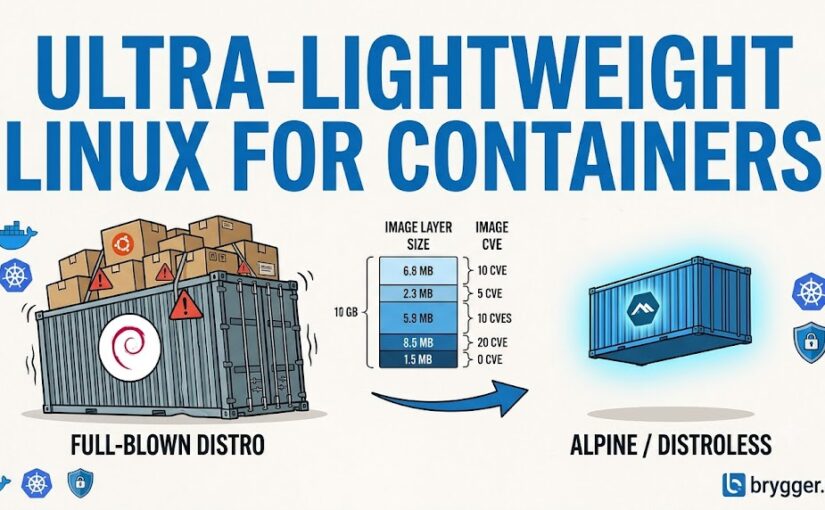
If you have spent any significant amount of time managing containerized environments, you know the pain of the “weekly CVE scramble”. You run a vulnerability scan on your pristine production application, only to find a wall of critical CVEs originating from packages your code doesn’t even touch. Why does a Go API or a Node.js microservice need a suite of device drivers, a package manager, or five different text editors sitting in its container layer?
Continue reading Transitioning to Ultra-Lightweight Linux Distributions for Containers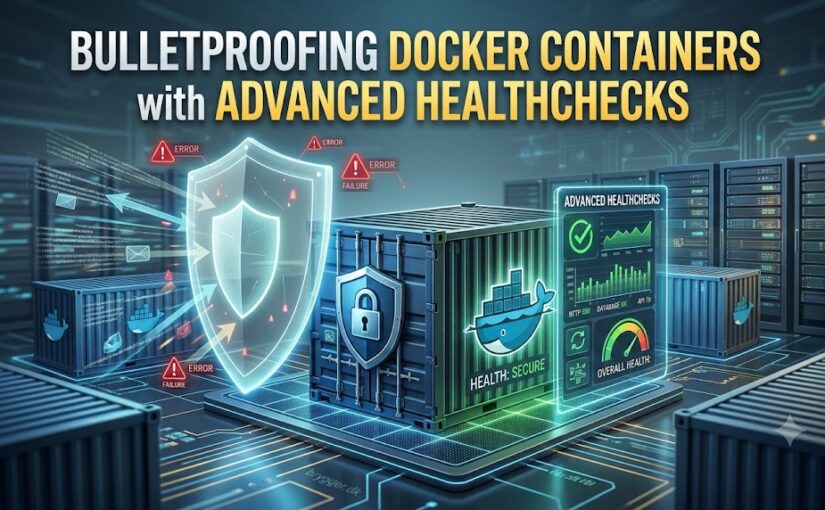
Bulletproofing Docker Containers with Advanced Healthchecks
In the world of containerized applications, “running” does not always mean “working”. We’ve all been there: a Docker container starts up successfully, the docker ps command happily reports its status as Up, and yet, your application is completely unresponsive. It might be stuck in a deadlock, failing to connect to a database, or silently suffocating under an unhandled exception.

Unlocking the Power of Home Labs: The Rise of Alpine Linux
As the world of computer science and technology continues to evolve, many enthusiasts are turning their attention to home labs as a way to experiment, learn, and showcase their skills. Within these home labs, one operating system stands out from the crowd: Alpine Linux.
Continue reading Unlocking the Power of Home Labs: The Rise of Alpine Linux